Sunday, May 13, 2007

Ralvon Arabians Part II

Sunday May 13 2007

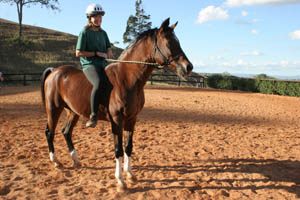
Though Ron Males is what you might call partly retired from owning an Arabian Stud farm, he still has plenty of things to keep him busy. He feeds his horses twice a day with help from his 2 dogs (some horses are boarded horses), he still shoes his horses, he gives riding lessons, and in between he goes “to have a scratch in me’ garden.” He still breaks in one horse a year, just because he likes doing it.

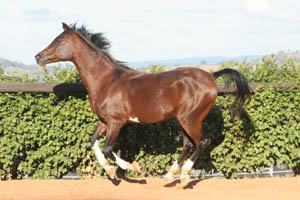
He told me what he and Val have always liked in Arabians, which is, in one word, Quality. He said the horse shows, especially in the U.S around the 1980’s or so, started getting away from what the Arabian breed was originally about. Nobody stops to think why horses have (or had) what they did. What was the Arabian horse? A desert war horse. Broad heads, deep jowls for chewing, nostrils that flare widely to let in air, strong necks. Small ears on stallions - the stallions didn’t have to do any listening for protection; the mares did that. They had bigger ears because they had to spend all their time eating, to nourish the foals at their side while probably being in foal again, and still protect their foals and the herd by listening all around them, while the stallions ate 6 hours a day and looked pretty the rest of the time. The Bedouins kept the foals in their tents, so if they weren’t gentle they were gotten rid of; they rode mares into battle because they were quiet - the stallions would have trumpeted their arrival. Why is the tail of the Arabian carried high? It’s to let the air flow underneath them to naturally help cool down a horse that travels miles and miles over the desert sand carrying heavy weight - the same place you first go, along with the head, to cool down a horse with water, underneath the hind legs. Well-muscled thighs and gaskins contribute to producing brilliant action. Ron and Val didn’t train their horses to have such good action, they bred for it. In the showing, Ron never clipped his horses, and he never put eye makeup on, (the horses, that is), and he never put grease on their faces. “If they don’t look good without the makeup, they just don’t look good.” And every single photo I saw of their horses were absolutely beautiful - a natural beauty, and all horses with substance.

Ron and Val believe in heart scores - measurement of the size of the heart. Of course it’s only one part of the whole picture, but they believe that if your horse has a small heart, he may be good, but he won’t ever reach that great potential because he’s limited by the capacity of his heart to work. This criteria has worked well for them over the years. The heart score on Milex, one of their stallions, was 140, the highest measurement, and the highest that had been recorded up to that time.

Ron and I talked about electrolytes - he never feeds them except a handful of table salt a few days before an endurance ride. They need to be hydrated before they go to the ride, he says; you don’t work on hydrating your horse during a ride. You teach your horse to drink on the trail when you’re out training: come to water, put him in the middle of it, don’t let him eat grass, wait till he drinks - and he won’t need electrolytes, especially if you’ve brought him to the ride hydrated. Teach him to stay there and drink while everybody else is galloping by. Trying to get him to learn to drink during the ride is too late. “Two minutes lost in a ride watering my horse saves me 5 minutes down the trail because my horse won’t be as stressed.”

He talked about today’s Natural Horsemanship trainers - those guys don’t always tell you all that they’re doing because they want it to look like magic. He watched Monty Roberts work with an unbroken horse once, and watched him instructing the horse subtly with little jerks and tugs on his halter (getting him used to pressure) while he was lecturing the audience with his voice and his other hand. He never told the audience what he was actually doing with the horse, so it looked like magic when Monty walked off with this previous problem horse following him like a dog. Ron rivals any of these showy trainers, only he doesn’t do it for show - it’s just his way of life around horses. He also doesn’t always cotton to the approach of complete gentleness to breaking. When ‘green horse people’ (my words - those who haven’t been around horses enough to really know what they’re about yet) try to copy these Natural horsemanship methods, it may work for a while, but what happens the horse deviates from the plan? Last week Ron was shoeing a horse somebody brought in for him to work on, and the horse jerked away and ripped open his hand with a nail. So next day, after he got his hand sewed up, he tied the horse’s back foot up, and let him fight himself (instead of Ron). That went on till the horse got tired of it, and he was good as gold after that. You can still be gentle, but you can also be firm and let the horse teach himself things. “Let the horse fight himself if he’s going to fight, not you.” He said “I’m always amazed by horses, even after all these years. I like to watch horses interact, watch how they respond to each other. If the dominant mare in a herd wants to walk through the herd, she flares her nostrils and slightly wrinkles her nose, and slightly pins her ears, and the horses part like the ocean for her. She’s not forceful about it. If we can communicate like horses, they understand us better. I like to work with the very young ones, especially. If you handle them with firmness, so you’re the dominant one, but with gentleness, they respond so amazingly easily.” Ron believes that in general, females are better with Arabians than males who like to dominate. With an Arabian, if a man wants to fight him or force him to do something, “he’ll have a fight and a half on his hands.”

Ron hand pasture breeds his stallions, if that’s what you’d call it. He takes them on a long lead rope into a pasture with a group of mares. The one or ones that are interested come up, the stallion picks his mare, and breeds her. He’s allowed to act like a stallion - prance and kick and leap around on the end of the lead rope - but once he’s done, he’s instantly brought back to human reality and is expected to behave properly with Ron. (And they do, because that’s the kind of horses Ron had/has.) His horses are all also taught to stand still when their lead ropes are dropped on the ground. He says “WHOA,” drops the rope (he showed me with Ralvon Mark ), and walks off, and the horse stands there until he’s asked to move or his lead rope is taken up again.

We also talked about his endurance training methods: “It’s the time you spend on the horse’s back that gets them fit, not the miles you put on them. Them carrying your weight is what wears them out.” He has a treadmill that he’s used for 20 years. During the show seasons, the stables horses were always turned out every day, and walked on the treadmill, by walking two minutes and trotting for 6-8 minutes.

Ron (and Val too) is one of those older and wiser horsemen whose methods have proven successful over the years, one that you can learn a great deal from by just watching. He still gives seminars on endurance (in fact he and Val were at a seminar at the Toft’s in December, where he was reunited with Chip Chase Sadaqa, who he rode to be 2nd in the 1987 Quilty) to get young people interested in the sport. He doesn’t do so much endurance riding himself, just a few training rides now and then with his grandchildren. I’d say, if you see him out there on the trail and you don’t know him, introduce yourself, because he’s one person that you can learn a great deal from.

Saturday, May 12, 2007

Ralvon Arabians Part I

Saturday May 12 2007

Ralvon Arabian Stud is one of the icons of the Arabian horse breeding industry in Australia over the past 50 years, and is likely well-known all over the world. They’ve been highly successful in the showring and endurance. Far above that acclaim, however, are the opinions of everyone I spoke to about Ron and Val Males, owners of the stud. “Wonderful people,” “I have great respect for them,” “Good, honest people,” “We don’t mind getting beaten by such upfront, honest competitors,” etc, and the unanimous sentiment expressed about them was “respect.”

Now located about an hour out of Sydney in New South Wales, Ralvon Stud started out quite modestly in 1953 when Ron and Val became engaged. Their first horses were two ¼-Arabian mares and an Arabian stallion. In 1962 they obtained Rickham, who was versatile and docile enough for Ron to ride bareback with no bridle working cattle, and who went on to sire the famous Ralvon Pilgrim in 1970. Of Rickham, Val has said, “he was a horseman’s horse of substance, soundness, and nobility.” Rickham had a favorite cat that he liked to carry around his paddock in his mouth. (The cat loved it.)

Before that, however, Ron and Val helped establish the first Tom Quilty ride in 1966, patterned after America’s Tevis Cup, and the beginnings of Australian endurance riding. Ron rode in that first Quilty on another of their stallions, Shareym; (the winner, Shalawi, ridden BAREBACK by Gabriel Stecher, was a ¾ brother to Shareym), Shareym went on to complete 6 Quilties, still a record for a stallion, and Ron himself became a Quilty legend, earning 21 buckles over his endurance career, including 20 completions out of his first 20 starts, a record that will be hard to break. He rode Chip Chase Sadaqa (the stallion now owned by the Tofts) in 1987 to a second place finish. Val herself has 2 or 3 of her own Quilty buckles. “I loved the Quilty,” she says.

In 1970, a star was born. A homebred by Rickham out of Trix Silver, when the foal’s head was emerging from the mare in birth, Val said, “We’re going to call this one Pilgrim, because he’s going to go far.” That really proved to be an understatement. They began showing him as a yearling, and 8 times in 8 weeks he was never beaten. They kept showing him through 5 years of age, and he was South Australian Supreme Champion, Victorian Supreme Champion, Brisbane Supreme Champion, New South Wales Supreme Champion. They finally retired him at 5, because he’d won everything and there was nothing else to win.

Then they heard of this World Championship in England at Ascot in 77; they and their horse were invited by Michael Pitt-Rivers of Tollard Stud to come stay with him and compete. “We couldn’t believe it,” says Val, “here we were, two country nobodies, wandering around England like Crocodile Dundee in civilization. (I think that’s why they enjoy watching this movie again and again.) We’d never seen a butler before!” She laughs gaily when she recalls them sitting down to an elaborate served lunch at a fancy table. “I had a big spoon at my plate, and I thought, ‘Oh dear, they are going to have me serve the soup,’ until I saw everybody had a big spoon. Then, when we tried our soup…” (at this point, she’s laughing so hard she can’t get the story out), “Ron and I looked at each other (doubled over laughing) with great big eyes, thinking (gasping for air, laughing so hard), ‘Oh dear, they forgot to heat the soup!’ but it was supposed to be served cold.” Great memories!

To the Males it was mind-boggling that they were even present at this world championship with a little homebred Australian horse of theirs, going up against horses from 14 other countries, and when Ralvon Pilgrim won Supreme Stallion, then went on to win Supreme International Champion, it was beyond a dream come true. Val’s written account of it is riveting and moving - and completely humble.

Ralvon Pilgrim sired countless champions, passing on his greatness in the showring and endurance. Thirteen years after his death, he’s still #3 on Australia’s Leading Lifetime Sires of Pure Arabians List. His progeny excelled at everything. He stopped in New Zealand on his way back from England, and Trevor Copland’s uncle Brian bred about 8 mares to him.

Milex was another great stallion they owned - picked out by Val, because she’d always wanted a son of Exelsjor. Milex was successful when they showed him lightly, but it was as a sire where he became a great legacy. When he died in 1996 at age 28, Milex had become Australia’s leading endurance sire as well as a successful sire of numerous Champions in Hand and Under Saddle.

The Puritan was another successful stallion story, also chosen by Val as a foal in 1970. He was Champion Stallion several times and produced many successful showring and endurance horses.

Ron and Val were the first to sell a purebred Arabian to America - to Wayne Newton in 1969. And they were the first to sell Arabians to the Arabs in 1992, so you might say they had a hand in helping to get endurance going in the Middle East, also. In the first races held over there, the horses were racing against camels - and they did quite well, when someone didn’t cut the course ropes and let a ringer camel run in front of the field near the finish.

The Males’ success in the Arabian world isn’t due to one specific type or bloodline of horse, or because of breeding just for show, or just for endurance - their breeding program has been a mixed lot of Crabbet, Egyptian, Polish blood: the main theme is all about being a good horse. As Ron put it, back in the old days, the Arabian horse in this part of the world was bred to be a work horse, not an ornament. In the 70’s, the Australian Arabian breeders started following the American way of showing and breeding, and that’s when some Australian breeders started getting away from the all-around accomplished Arabian horse. The Males always stuck to their beliefs: they always expected their horses to be good at everything - showing in hand, under saddle, in harness, and in endurance; and they have done just that.

Every single one of the pictures they showed me, I was looking at knock-out horses - horses with depth and substance, good strong bodies, not those pencil-thin necks and flat toplines. There wasn’t a one that didn’t look like it could carry a heavyweight rider 100 miles, but that was still so strong and beautiful enough for a showring.

At one time they had 300 horses on their place and 4 full-time employees; now they’ve cut back drastically in semi-retirement; they have about 12 horses, none really going in endurance, and they’re selling the last of their broodmares. They still have, and will keep the two stallions, Orlando and Ralvon Mark, a Ralvon Pilgrim son, and a couple of riding horses, including Ralvon Grace, who finished 4 Quilties.

Their 3 children did some riding, a bit of showing and endurance, though now they’ve grown out of it. A couple of grandkids still do a bit of riding; Ron rode with 2 of them recently in a training ride, but they’re not obsessed with it.

It’s been a whirlwind 50 years of good and bad, great disappointment and extraordinary success for the Males. They earned their deserved respect through hard work and skill, and through it all, they’ve maintained their integrity, congeniality, and gratefulness for their success.

Endurance: Riding or Racing?

Saturday May 12 2007

I had some interesting conversations with many people in my New Zealand-Australia travels about the sport of endurance riding. Or, maybe it should be, the leisurely hobby of endurance riding, and the sport of endurance racing.

One breeder I spoke to was amazed that America is not a leader in international endurance breeding and winning, and contributing to raising the level of the sport. She was adamant (in a cheerful sort of way) that unless you race and win, endurance riding is pointless. "What's the purpose of endurance riding, if you're not out to win?" she asked.

I said (also merrily) it wasn't pointless at all - my idea of endurance riding is going to a multi-day ride, and having a fun social time riding over beautiful country and visiting with good friends and camping out (and maybe trying to stay on your horse in a windstorm without losing your temper, or dodging lightning bolts). Sure, riding a fast horse once in a while is fun (especially if you can actually control the horse), but it’s not my absolute yen.

She’d used the term endurance riding, but I said “No, you're talking about endurance RACING; I am talking about endurance RIDING.” She said it's the same thing, but I disagreed. I guessed that at least 80 percent of endurance riders in America are out to endurance ride, not race, and I heard that same rough figure quoted several times in New Zealand and Australia. There are those endurance riders, that will go to 50-mile (or 80 km) rides to race and win them, but many of them aren't aiming for 120 km or 160 km (100 mile) FEI international competition - they just have a horse who can go out and win, and they enjoy it.

She was frustrated that America doesn't have breeding programs to improve the sport (faster times, lower heart rates, faster recoveries), and by doing so, make these great horses available to everybody. My response was, why should I pay (or how could I pay) $50,000 for a well bred horse to do endurance when I can get a decent horse for $3000 (or free), one that will last me 10 years and do 10,000 miles? I'd much rather have that horse than a fast one for one season that I could sell. Her contention: Why would you want that when there are all these good horses out there to ride, especially your homebreds? I agreed that would be nice, raising your own foals, breaking them in, and having champions that win international rides. But, who can afford that? Think of not just the cost of starting a breeding operation, but, the time. When your first crop hits the ground, you may not find till they are 9 or 10 years old if they are really any good.

Her reasoning: But if you say that you can't afford it, you will never improve the sport. But, said I, a majority of us don't want, or have a need, to improve the sport of endurance riding, or racing. I also didn’t think many people could afford to endurance race their horses and go through them like this - always have another good one in the stable. I'd guess a majority of our riders have houses and mortgages and kids and board their horses away from home, and have to pay trainers to train them while they themselves work to afford them. And I'd say that the majority of endurance riders (not racers) wouldn't want to sell their horses anyway. We get too attached.

Her case: Wouldn't you want to be the best of America and represent America in the endurance sport? You could be the best you'll ever be, representing your country in international competition, with a stadium full of cheering people!

Me - um, well, no. Maybe I wasn’t the one to ask that question, as I really don’t have a competitive bone in my body. (This perhaps comes from my high school basketball years: my Junior year 2 wins, 21 losses. My senior year we greatly improved - doubled our wins! 4 wins, 19 losses. I learned that winning wasn't everything. We still had a great time playing while getting our butts kicked.)

Her conclusion: That's the problem! Though to me it wasn’t a problem, because the racing scene really doesn’t apply to me. Although, I would not turn out the chance to ride a good fast horse in a 160 km ride, just to experience it, and report on it, of course. Though I’d probably be just hanging on, with my eyes closed half the time, and going too fast to take pictures. J

I’d asked Meg Wade about the 2 aspects, and she agreed there is a difference between endurance riding and endurance racing, and she doesn’t see a conflict - to each his own, there’s a place for everybody.

Peter Toft agreed also. His passion is 160 km rides - he doesn’t particularly care to go out and win 80 km rides because his goals are the 160’s. But he thinks it’s great that other people want to do other things, stick to 80 km or 40 km rides, occasionally try the 160’s. The people that are out there to camp and socialize and have fun, great, good on ’em, they support the endurance industry too. He sees the need for both endurance riding and endurance racing, not one or the other. He respects the riders and horses that do the endurance rides, and those horses that reach 3000 miles and over, and he is quite interested and active in getting young people interested and participating in endurance.

In the endurance racing world, there’s no doubt that the Arabs have had a big influence in getting the sport going in the direction it is now: they drive the market. They are big clients of both the big breeders, and some of the backyard breeders, who come up with a really good horse once in a while, and maybe sell it to the Arabs for enough money to pay for their endurance activities for a year or two. In the casual endurance riding world, we really aren’t affected much at all - when someone wins an international 160 km ride in 8 ½ hours, we’ll still be happily poking along looking at the scenery in our backyard forests or deserts, socializing with fellow pokeys.

I met plenty of New Zealanders who wish they had a choice of not having to be part of FEI because of the plentiful rules (which aren’t always strictly followed everywhere for every ride) and especially the increased fees. One person said that while you may not like the increased fees, they’re necessary for insurance purposes, though I’m not sure why that is so. The foreign veterinarians add to the cost, though in Australia the ‘foreign’ vet can be from another state, and in New Zealand, he or she can be from the other Island. More rides are going with sponsors anyway to help defray the costs. One Australian rider thought that going by FEI rules for all rides in the country was a good idea - better for the horses when you’re talking about the vet gate into holds, but also didn’t think the higher fees were necessary. I think Aussies and Americans are quite happy to have the choice, some of us in both worlds never intending to cross over into the other.

Either way, I say pick your sport and enjoy it. That’s what it’s really all about, right? If you don’t like it, there’s always the Mounted Games to try!

Thursday, May 10, 2007

Toft Endurance Finale

Thursday May 10 2007

Sadly, it is coming down to my last week in Australia. Same thing as in New Zealand: HOW DID THIS HAPPEN SO FAST?

I was torn between two choices: staying another weekend with the Tofts, and riding in a 40 km training ride with them, or heading off to Sydney before the weekend to visit with Ron and Val Males of Ralvon Arab Stud. Obviously, either one I chose would have been an excellent choice, but either one I missed would be an experience sorely missed. But like I always say when I’m disappointed that I miss a ride, there’s always another ride, so, I booked a ticket to Sydney for Friday to visit with the Males.

Thursday morning, my last full day at the Tofts’, I went to the barn and hung around a while, watching another load of horses being loaded on another van, and watching Peter watch horses trot out. He was studying them at the walk, at the trot, on a hard dirt road, up a hill and down. He probed for sore spots, he looked at feet. “There are 3 things we look at,” he told me, “soundness obviously, heart rate recovery, and supple muscles. See this here?” He was standing behind Murdoch, and ‘fluffing up’ his butt, and it jiggled like jello. Of course Murdoch is a little fat right now because he’s had a little rest, but he said when they’re fit, you still want to see loose, supple muscles, not muscles hard as a rock. (I think my horse Stormy’s are pretty loose but that’s because it’s all fat and no muscle! And his heart rate stays pretty low, because he doesn’t do much!)

Today I saw Murdoch’s 5-year-old appaloosa half-brother; he’s not done any rides yet. Penny said he has the look and feel and attitude of Murdoch, but, Peter said it’s just too early to tell how he’ll perform. Later I also saw a full sister to Murdoch, who they’re keeping as a broodmare. She’s with another hundred or so Toft horses at Peter’s sister’s place about 20 minutes away. Everything there is also brown, brown, brown. Peter’s having to haul all his water onto his farm, (and you can’t use city water for your garden, only for household use and livestock.), but his sister’s farm has its own spring water, though the paddocks here are pretty bare also. Out here are horses vacationing from breaking, and some just growing up - yearlings, two-year-olds, mares, oh, and a mob of wild kangaroos. In one paddock, a 17-year-old gelding, a former 2nd place finisher in the President’s Cup, Kadish, has the enviable job of babysitting the mob of yearling fillies. “He’s pretty special to us,” said Peter. “He’s the strongest horse I ever rode. In one ride we were going sideways, and he was so strong, I thought we were going to crash into this telephone pole and knock it right over.” Maybe Kadish will be giving the fillies some pointers.

Friday Peter had a meeting in Brisbane, and he took me along to drop me off at the airport afterwards. We passed RIGHT BY the street where I lost the Raven. I kept my eyes peeled, and told Peter he’d have to stop in the middle of the road should I happen to scream because I saw it, which he readily agreed to, but sadly, I did not see it.

I boarded the plane and headed off to the Sydney area. Now I’ve really left Brisbane and the Raven behind. (Unless it finds its way back to me…)

Wednesday, May 9, 2007

Chip Chase Sadaqa

Wednesday May 9 2007

If he’s not The top breeding endurance stallion in the world, Chip Chase Sadaqa (AKA “Wings”) is right up there. He’s 30, and looking quite good for such an old man, and he’s still serving mares. A vet had come to the farm last year or so, and one of the girls asked the vet to watch this horse trot out. “How old do you think he is?” “Oh, I don’t know,” said the vet, “5?” The Tofts have gotten 3 crops out of him since they bought him three years ago, and they really like everything he’s produced for them so far. They’re breeding mostly Anglo mares to him - it’s not a market decision, but just that they prefer to ride horses with a little more scope than Sadaqa, who’s 15 hands. They’ve also been buying Sadaqas around the world that they can find, because they like him and believe in him so much.

Sadaqa won the Quilty once, was first over the line maybe 3 other times but vetted out - he usually carried a 115 kg rider. Ron Males rode him once to be 2nd. Meg Wade likes Sadaqa too - she has a bunch of them - and he has produced and still is producing winners all over the world - Europe, Ireland, Malaysia, Australia, the Middle East. Pretty much every year he’s gotten top finishers in the Quilty. Brook Sample’s horse Brookleigh Casper that won last weekend’s ride in Imbil is by Sadaqa.

His original owner Pete Cole bred all kinds of mares to him, not select ones, and early on they appeared to be pretty good offspring. Often an endurance stallion becomes great after he’s dead, because after a riding career, he’ll start breeding, and it may not be till his first crop is 10 or 11 before you see if there’s a really great horse or two in there. Then you wait for the next crop or two to see if that was just a fluke. With Sadaqa, it appeared early on that he was throwing good horses. Before Australia had the FEI rides, they did the hour holds with a vet check an pulse check at a half hour (still the same in some rides; you don‘t have to pulse down when you come in, you just have to vet and pulse down at a half-hour after arrival), so, the horses always had plenty of time for their heart rates to come down. Once the vet gate into holds started, where your time didn’t stop till the pulse was down, that really moved the Sadaqas up a notch because they really did have great heart rates and recoveries. Peter likes them because they’re intelligent, very tractable and easy to handle, on the ground and in the vet ring, and, they’ve just proved to be good.

Jaimee cleaned Sadaqa up one day so I could take photos of him. Sadaqa likes Jaimee, and he likes getting her as wet as possible when he gets a bath. You can tell he does it on purpose. After he dried off, she led him out onto the grass, and said, “You want to get on him and have your picture taken?” I laughed, “Yea right!” Jaimee said “No, really! We do that for our Christmas pictures. Peter doesn’t mind.”

I could just picture it. Merri climbs on this famous valuable 30-year-old stallion thinking the joke was real, and he bucks her off, gets loose, tries to jump a fence for a mare, has a heart attack, or something. Or worse, Peter drives up just as I am sitting on his back and he shoots me off the horse.

But apparently Jaimee was serious. We went in the arena, and Sharon followed with my camera. (That way, if he bucked me off, we were in the arena and he wouldn’t get loose.). Jaimee tried to hold him still by his halter and lead rope as I set the mounting block up beside him; I sort of hopped up and flopped on his back, and he really started squirming. Not wanting to stir him up more by hanging over him, but wondering just how I was going to swing my leg over him without making him more fidgety, I figured I’d better just do it. I did a bit awkwardly, and he tried to jump forward, and I started sliding off his back, because he was so slick from Jaimee’s crème rinse. Whee! But I stayed on, and Jaimee tried to get him still for just one picture, but he wasn’t interested - he felt like he was ready to start an 80 km ride at the front of the pack!

Finally she tied the end of the lead rope back to his halter and handed it to me as reins, and that worked a little better - we finally got a partially still picture with me on the legend Sadaqa’s back. And not wanting to press my luck with him behaving (or have Peter drive up, just in case), I jumped right off him, though boy would it have been fun to canter around the arena on him! (I probably would have fallen off.)

We then turned him loose to run around a bit, and run he did, around and around, and it took 3 of us to corner and catch him, and only because Brooke brought the horse she was holding outside the arena to the gate, to catch his attention. He sure doesn’t act like a 30 year old man - hopefully he’ll be around a good while longer!

Friday, May 4, 2007

Imbil 160 km FEI Ride

Friday May 4 2007

It was oh-so-nice and chilly overnight, and foggy in the morning, though once the fog burned off, it started warming up very rapidly.

Peter had left Imbil for home at 4 AM because he had, as usual, dozens of things going on he needed to take care of. Before the heat got too out of control, Penny and Brooke went for a ride on Don and Bronco, and Melissa and Alexandra went for a ride on Kamahl and Jazzmin, while Jaimee cooked breakfast sandwiches, ham and eggs, for us. Alexandra is a year too young to ride in 160 km FEI rides yet, (14 is the limit) but she’s looking forward to her first one.

After lunch we took the horses out for a walk, which turned into more of a grass-eating outing. This was the first real grass the horses had seen in who-knows-how-long, and we let them rip it up. We didn’t have much of a choice anyway because we couldn’t drag them away! It got so hot in the sun that we retreated to the shade of a big tree and let them eat under that for a while. We had to tug hard on them to get them to go back to their pens. Jaimee and Penny noticed later that Don was not happy because all the horses had to go through his pen to get to theirs; so Don was moved to a back pen where he wouldn’t be bothered all the time.

Friday night after dinner, Penny pulled a chair up in front of Don’s pen. “Admiring your horse?” I asked. She said “I’m studying him. Wondering what he’s thinking.” I think she’s besotted.

Not too many more people had pulled into the Fairgrounds yet. Everybody in the Toft corner crawled in bed by about 8:30, and all was quiet on the ridecamp front.


Saturday May 5 (Kentucky Derby day, back home)

In the morning after feeding everybody, Jaimee noticed that Don wouldn’t eat his food, because, back in his front big pen, his feed bucket was too close to the gate where people kept coming and going to get things. So she moved his bucket of food to the back of the pen, and there he stayed, happily eating now, further away from humans.

Peter returned this morning, this time to stay through the ride, and, his phone didn’t even ring off the hook. Well it did ring, but not constantly. He even sat down a little while under the big tent we’d had put up at our spot, though he couldn’t sit still for too long. He had all 5 horses brought out to watch them trot out. From watching and studying them, and giving them all the once-over, he decided Penny would of course still ride Don, Brooke would ride Zalman, and Melissa would ride Kamahl.

Then they saddled them up and took them for a ride; Peter said I could take Penny’s car and drive up the road a ways and take pix. Yikes! I did, driving very carefully, and sweated in the heat waiting for them. It really was very hot today… not Malaysia hot, but unseasonably hot for this time of year here. By now, at the Toft’s farm, horses are normally wearing two rugs during the day. Just the thought of a rug, any rug, even their light ones, made me wilt.

Back at ride camp, friends of Melissa’s, Jackie and Geoff Richards from Cooroora Arabians, stopped by; I got another “Oh you’re the Raven lady!” It seems my stories are going around Australia’s version of ridecamp, and some Aussies are also contemplating possible Raven replacement solutions. : ) (Stay tuned for a comprehensive Raven update). I also met Sue Crockett the photographer whose good photos I’ve seen in a number of endurance magazines in Australia and New Zealand, and her husband Toby.

Later the horses were saddled up again for a ride, and I got to go along with Melissa and Alexandra, on my buddy Bronco. We headed up the road and did a little 10 km training loop through the pine forest (no eucalyptus here), and already with that little bit, I would have been lost! There were big arrows marking the trails here, in different colors, but I just seemed to miss some of them! Good think I wouldn’t be whizzing along in the dark on this ride.

We met quite a few riders coming and going, but there weren’t too many boisterous hellos. Maybe it was my reputation as a New Zealand Dreg, or maybe it was the company I was keeping, or maybe it was just that all the riders were concentrating hard on their challenges for tomorrow. Or, it was too hot and everybody was stunned from the heat. Or maybe it was that everybody else had been there before, and I was overly excited just to be lucky enough to be riding a horse with good company on a new part of the planet. Too bad the Raven wasn’t riding along, because he would have been having a great time too, and people probably would have recognized him!

When we got back to camp, Penny and Brooke and Melissa got their tack ready, and the Toft crew set up buckets and things for the strapping. Vet-in was at 2:00 PM; and while those of us without horses were watching, Mark Tylie, the young man who won the New Zealand Nationals appeared, and said “I have a package for you.” He was kind enough to bring me my credit card that has been chasing me around the world for a while. I think the card has more air miles than I do now. Mark wasn’t riding; he was just here to watch the ride.

Sample and Partners sponsored this first FEI *** 160 km ride in this part of Queensland. There was only this 160 km ride and no other distances; I’d talked to some people who weren’t coming because they weren’t ready for a 160 km this early in the season. So the Imbil ride probably missed out on a bigger number of riders, though putting on an FEI the first time was probably a big enough task that they didn’t want any other distances to deal with.

At the 5 PM ride meeting, Bob Sample talked about the ride, and gave out the official ride time, which we all set our watches to. He said temperatures were 6-7* above average yesterday, so that was going to make it harder on the horses. FEI requires 6 loops, so they would be: loop 1 - 37 km, loop 2 - 30 km, loop 3 - 26 km, loop 4 - 31 km, loop 5 - 21 km, loop 6 - 15 km. Pulse criteria 64. 40 minute holds except for after loop 4 (60 minutes, with a represent 10 minutes before going out) and the final hold of 30 minutes. Because there had to be 6 loops, the course was harder; it took 15 km to get out to where the hills flattened out and 15 km to get back, so there was no chance to even get to the flat ground, so much of the course would be challenging hills to climb. There’s talk of making it a choice of 5 or 6 loops in the FEI rides. I agree with the sentiment that the more loops you have, the more it puts the responsibility of the welfare of the horse on the veterinarians, and that’s not right. It’s the rider’s responsibility to know and take care of their horse, not the vet, who sees the horse for maybe 2 minutes. 39 riders were entered - 25 Open riders and 15 in the Youths.

Since the ride was starting at 2 AM and we were all getting up at 1, we all went to bed around 8 PM. All except for Louis and Sharon who’d help with strapping, who were on their way from Marburg. Their first vehicle broke down on the way so they didn’t arrive till 11 PM in another one.


Sunday May 6

Okay, this time, I managed to be up and present for the start of a ride. This starting rides at midnight, or 1 or 2 AM is just at a time I’d rather be snoozing! 39 riders left the Fairgrounds behind Bob’s vehicle in an orderly and unruffled start. Don and Zalman were in the middle of the pack as they trotted past me out into the night.

While everybody stayed up and waited the 2 hours 15 minutes (Peter’s prediction) for Don and Zalman to come in, I couldn’t help myself, I crawled back into my tent just to lay there for a few minutes. Predictably, it turned into a full-out unapologetic snooze, which lasted till 4 AM, when I crawled out to join the others. Sure enough right around 4:20, in came the first 3 riders, Penny, Brooke, and Brook Sample on Brookleigh Casper. It was quite cool and damp for us sitting around waiting, but Penny and Brooke said it was very hot out there on the trail. While the horses were warm, we didn’t yet need ice water to cool them down. And when I say “we” I mean “they” the strappers, I stayed close to watch, but stayed far out of the way. Adbullah and Mada had also come to watch the ride, and they were helping strap. The Toft team had their precise techniques down, everybody doing their job at the right spot and right time, and I wasn’t going to get in the way! The horses vetted through nicely and ate throughout their vet check.

Going out on the second loop, it was discovered that the official clocks were 5 minutes faster than the time given last night, so some riders went out late, some went out early by the original official time… it took a few loops to work things out, and by then I was so confused on the times that I couldn’t even tell time anymore, so I just stuck to taking pictures.

Melissa came in looking good on Kamahl off the second loop; as they were cooling him down they checked his feet, and Abdullah noticed that the pad on the first foot he looked at had an air pocket in it - it was supposed to be sealed with silicon - and they found the silicon had disintegrated and the pad was ripped. It had happened to all four feet, and it turned out to be bad luck, as Kamahl vetted out lame. Too bad, because Melissa was really pleased with how strong he felt.

I spent some time out on course photographing with Sue Crockett and another regular photographer, Peter Jackson, a jolly Scottish Aussie who just loves the endurance riding. I quite enjoyed their company. We found a spot up on top of a hill, at a water stop and checkpoint, overlooking the forest. It was actually pleasant up on the hill there sitting in the shade. The riders said it was hot in the sun, (but not as hot as yesterday) but fortunately they were in the shade about half the time.

Back at base camp, Penny and Brooke and Brook were still in the lead, coming in about the same times together. It was still hot, and they were now using ice in the spray water to cool the horses down. Penny said Don was just great today, he didn’t run off like a bat out of hell, he let Penny control him and wasn’t pulling on her, just flying along steadily. Of course, she kept her fingers off his Go button behind the saddle. Brooke, riding beside and behind him on Zalman, said Don was just amazing, he just goes and goes, he’s like a machine. When Don was trotting, Zalman had to canter to keep up with him, and when Don cantered, Zalman had to gallop - and they’re about the same size. While being strapped, Don puts up with it, since he knows what they’re doing and likely cool water feels pretty good. When he goes into the vet ring, he stands there with a scowl on his face, not liking being touched, but he just puts up with it because he knows it will be over soon and people will get out of his face for a while. He pins his ears and scowls as he’s trotting out, as if this is all silly and something just to be tolerated. I think that if Don could just do everything himself, vet himself, cool himself down, he would do it just so people would leave him alone.

Brooke and Penny and Brook were still within minutes of each other coming off the 4th and 5th loops; Brook Sample ended up winning on his gelding Brookleigh Casper by 9 minutes. They all finished around 4 PM, under the magic ride time of 10 hours 40 minutes. Bob Sample had predicted the winning ride time would be around 10 hours. Penny couldn’t watch Don be vetted through (though I think she peeked); Jaimee vetted him as she’d done all day, and Louis took Zalman as he had all day. They both vetted through great, as did Brook Sample’s horse, and everybody clapped and breathed a sigh of relief. Peter was holding Don afterwards, and I teased “I bet he looks kinda pretty now, doesn’t he Peter,” and Peter tried not to smile.

Our horses were taken back and hosed again, given the good food, and immediately got all 4 legs wrapped, and left to rest. Louis and Jaimee run fine bandages. Jaimee’s worked for the Tofts for 3 years, and Louis, from South Africa, has been with them for 5. Don was getting cranky that so many people were fussing over him, and later Emma the massage therapist, who’d come with her husband, worked on Don. He was pinning his ears and swinging his head around to her as if to bite her, but he never did.

Riders trickled in throughout the evening into dark. We went into town for food; at the café we ordered food, and cappuchinos, and desert and more cappuchinos. Louis was starving and the others were quite tired. Sharon was about to drop - it was her first time strapping at a ride, and it was off about 1 ½ hrs sleep, following a full (very successful) day at a show with her daughter Shaylee (among others, Shaylee rode Bremervale’s stallion that she rode at the last show, and they got Supreme Champion yesterday). Peter and Penny joined us, arriving in timely fashion just as the food was being served. Peter was already looking ahead and thinking about the next ride and possible horses to go in it, and to next day’s work line-up and work at the farm - always thinking ahead, never a rest.

The nice ladies in the café had already had a long day (some art show in town, lots of people), and I think they were so glad their day was over and we were finally done ordering and eating, they gave us our 3 cappuchinos and my ice cream free - one lady had said, “Oh, you should have tried the macadamia ice cream - I’ll bring you a scoop” which she did, plopping another one on top of the ones I already had. I sure didn’t complain!

Back at ride camp, Peter had decided he wanted Zalman and Don walked every 2 hours through the night, since they’d both be showing for BC tomorrow. The 5 of us were trying to figure out who would take what shifts, when Peter changed his mind and said just do it at midnight and 4. Sharon went straight to bed, and I told Melissa to wake me if Sharon wasn’t up for the 4 AM one. I popped in earplugs, and covered up in the blessedly cooler night, and crashed.


Monday May 7

I don’t think I heard Melissa get up to walk the horses. I did take my earplugs out at some point and slept some more. I did wake up about 6 when I heard rain - rain! Which only lasted about 2 minutes.

Peter and Jaimee were already up walking the horses when I got up at 6:30. We started packing some things away , and then it was time for the parade of finishers and the BC judging. 7 of the 15 juniors finished (2 withdrawals, 1 metabolic), and 10 of the 25 open riders finished (5 withdrawals, 1 metabolic). A low completion rate, but it was probably good to see those withdrawals, thinking on the hard ride and hot day. 3 showed for the junior BC, but one girl’s horse was lame hand-trotting out, so she withdrew. Zalman looked great on the ridden part. Brook Sample’s horse Brookleigh Casper and Don looked by far the soundest, though Don doesn’t care a whit for arena work and hasn’t been trained in it. Penny was saying “Whoa” to him over and over because she felt like he might start bucking. I thought he might just run off back out onto the course for another loop! Brook Sample’s horse did some flying lead changes. Toby Crockett said “Here comes a Mountain Man show,” and I think Brook’s known for his flying lead changes in BC showing - which this horse did.

Back at camp we continued packing things; Penny cooked us all ham and eggs and I made coffee. We loaded up the horses, and Peter left with them and Melissa, who he was dropping off at the airport. We were ready to go just as the meeting started; we went to the clubhouse, where complimentary food was set out, and sat through the awards… BCs went to 2nd place Kaylea Maher and Raaward Kasmin, and BC went to Brook Sample and his horse Brookleigh Casper. Nice completion awards were handed out - handy push carts for camp for the finishers and bronzed horses and horse head statues for the top 5.

So that was my taste of an Australian FEI ride. Good horses, good riders, lower completion rate, people enjoying themselves, some people not enjoying themselves (it seemed). Nice country, challenging trails. Seems to be the same in my travels everywhere so far! Of course, I will get a far better idea if I can visit many many more rides. : )

Pre-Imbil

Tuesday - Thursday May 1-3 2007

TUESDAY
The ride at Imbil this weekend (Sunday at 2 AM, to be precise) is a 160 km FEI ride. It's a harder ride - lots of hills and hard roads, and people have tended to get lost here, and the winning time will probably not be fast. Peter's not completely sure yet which horses are going, or who's going to be riding them, but Don is a definite ride for Penny (so far).

Today Don got a good shampoo bath. Opinions are pretty much divided right down the middle as to whether Don is beautiful or ugly. I of course think he's beautiful, as does Penny. I went up to pet Don as he was drying off, but he wasn't even interested in sniffing me. Not a people horse. DOesn't hate them; just not interested. Some of the girls say he's a grumpy old man, and I've found that he sure doesn't pose with his ears forward much.

The usual work around the barn went on: feeding, horses on the walker, horses on the treadmill, horse baths, a few horses ridden, Gary shoeing horses.

WEDNESDAY
Today a massage therapist, Emma, came to work on the possible ride horses, which are at the moment Don, Khamal, and Salman, possibly Bronco. I watched Emma, a licensed human massage and physical therapist (4 years at University), and animal massage therapist (2 more years of schooling) work on Don and a few others. Don was cranky when she found some touchy spots on him, and he'd turn his head and frown, but he still took it, and the rest he seemed to not mind at all.

Meanwhile, Peter was in and out; Abdullah showed up (he won the Quilty last year on Peter's horse Tora Blar-Zay) and went for a short ride with Jaime; Louis ws clipping horses for the ride; more clients showed up; the phones kept ringing; and the usual feeding and shoeing and walking and treadmilling and lunging and bathing was going on.

I went into Ipswitch with Penny for groceries; we stopped at an outdoor produce market where she got a HUGE bag of great fat carrots, and apples, "For Don, said Penny. Then she added, "And friends." I suspect Don may get most of them. He likes the green apples better, and she got more of them.

THURSDAY
Even though the ride starts early Sunday morning, and Imbil is only 3 hours away, we are supposed to leave this afternoon.

The barn is quite chaotic with everybody running about doing regular chores, and the normal irregular durites of moving horses to and from paddocks and farms and quarantine, and packing for the ride. Penny is packing equipment for the ride into big trunks; Peter is looking at horses and directing traffic with people; Gary is shoeing; a mechanic is working on one horse float; horses are getting bathed, horses are on the walker, a horse is on the treadmill; a load of shavings is coming and will be dumped in the middle of the barn; someone will have to go to the airport and pick up Melissa (she's going to ride one of the horses at Imbil); Peter needs someone to go to Bremervale Stud and trot out a few horses for Dr Kamal. He picks Shaylee, and I jump in the car with her.

It seems fairly stressful (not unbearable, but the energy is definitely higher) getting ready for a ride (oh boy, I couldn't imagine a World Championship overseas), and while Shaylee says there's definitely more pressure, especially strapping at the rides, Peter's one of the best people to learn from.

Shaylee's 18 and has worked for the Tofts for 2 years (her mother started full time a year ago). The first day I saw her on a horse, just at a walk, I could see she was a very good rider. And she certainly is: in 2001, she was the Champion show rider in Australia in her age group on her pony, who's gone now. She's been in the Top Five 4 times, and last year rode Bremervale Justice - one of the Toft's best endurance horses - to National Top Ten in his first show. Shaylee's done some endurance rides, and one of her goals is ultimately the Quilty. If she had to choose, she might say she liked showing a little better, "I know I get a lot more sore from an endurance ride!" She said the Tofts ask their workers each year what their goals are; "they've been really supportive of me and my showing." Last weekend we went to a local horseshow where Shaylee rode 3 of Penny's horses, an Arabian gelding, a part-Arabian mare, and a Welsh pony mare, and a young stallion and mare from Bremervale Stud (she was quite busy all day); every horse won some ribbon, and the stallion won his hack class, and the mare won Grand Champion Novice Arabian Hack.

On the way to Bremervale, on the outskirts of Marburg, in a field there's a float and 6 horses eating hay (no grass to graze). Shaylee says that it's Jeremy, who used to work for the Tofts. He and an English gal (who also worked there for 6 months) are going to ride across Australia on the Australian National Trail, north to south, I think, starting in a few days. They expect it will take a year. Now, I think it's just great when I do a 4 or 5 day endurance ride, thinking I've accomplished something. If you're like me and you think that, go to HYPERLINK "http://www.thelongridersguild.com" www.thelongridersguild.com and have a look at some of those people. I expect Jeremy's travels will fit right in here.

A kangaroo hops across the road in front of us before we drive into Bremervale Stud. Owned by Peter's mother Jill Toft and run by Peter's brother Warwick, Bremervale is the leading Arabian show horse stable in Australia; and they own the leading Arabian sire in Australia, Desperado (I touched him). Jill had saved the name for a very special horse, and when this foal dropped, she knew this was it. She called her boys and said, "I've got my Desperado." The whole barn is full of show horses. If you are somehow not impressed with the beautiful horses, you'd have to at least like their Lord of the Rings names: Bremervale Gandalf, Bremervale Arwen, Bremervale Theoden.

Bremervale Justice, now he's a story too. He was destined for the show ring, and Warwich was out riding him as a green 5-year-old or so one day, and Peter saw him. He asked if he could try endurance on him, and the rest is endurance history. Justice is now 14 and has been to 4 World Championships, including New Zealand, France, and Germany. He's finished the Quilty "nearly every year," is almost always in the top ten placings in his rides, and has vetted out (pulled) only once. "He's a beautiful horse, good type, and he's got a great personality," says Penny. "AND he's feisty to ride." By 2005 he'd completed 3000 km in the middle/heavyweight division. But that's not the end of the story either. Last year, during a lull in the endurance season, they fattened him up, put him in the arena to work a few weeks, and he went to his first show and placed in the Top Ten National Purebred geldings.

While Shaylee trots horses out, I wander around a bit (but nearly all the close-by horses naturally have rugs on), seeing fields full of Arabians, and admiring a well-mannered white stallion turned out in an arena. We're there about 45 minutes, before we return to the farm. Now the Dream Catcher 8-horse trailer/living quarters (size of a semi-truck) has pulled up, and Penny is starting to pack it. I do what I can to help, then escape to the house, to stay out of the way, until it's time to leave.

I ride in a car to Imbil with Melissa (from up north; she trains a few horses for the Tofts and rides for them occasionally) and Brooke; they talk horses and fondly of the Shahzada marathon, which I'd love to do one day. Melissa asks me what I'm doing here; I say, "I'm here for endurance.net, the American endurance website. I..." "WAIT! YOU'RE THE RAVEN LADY!" So we have a laugh (OK, a sad laugh from me) about me and the Raven, and meanwhile Brooke's phone rings, and it's some guy Neil, and when he fins out we are all on our way to Imbil, he asks, "How's the Raven Lady?" Brooke asks, "How did YOU know about the Raven Lady!" and we have another laugh. Maybe the Raven will still turn up somewhere somehow!

We get stuck in big traffic going around Brisbane (where the Raven is somewhere), and it took over 3 hours to get to the little town of Imbil. Peter parked the big rig with direction from a ride official, and we unloaded the 5 horses (Don, Bronco, Khamal, Jazzmin, Salman, though so far only Penny, Brooke, and Melissa will ride) into some nice available pens, and feed and fetch water for them. We also unload the 2-horse float that Louis and Jaimee have hauled carrying the ride equipment; and we set up a huge tent for Melissa and me. There's only 2 other floats at base camp, and a few horses, and it's cool and quiet, and everybody's asleep by 10 PM.